Haath se
Unmute
For many Deaf people in India, the barrier isn’t the inability to communicate. It’s a society that hasn’t learned their language.
And what if we could change that, not with another awareness campaign that people forget tomorrow, but with a game they actually want to play?
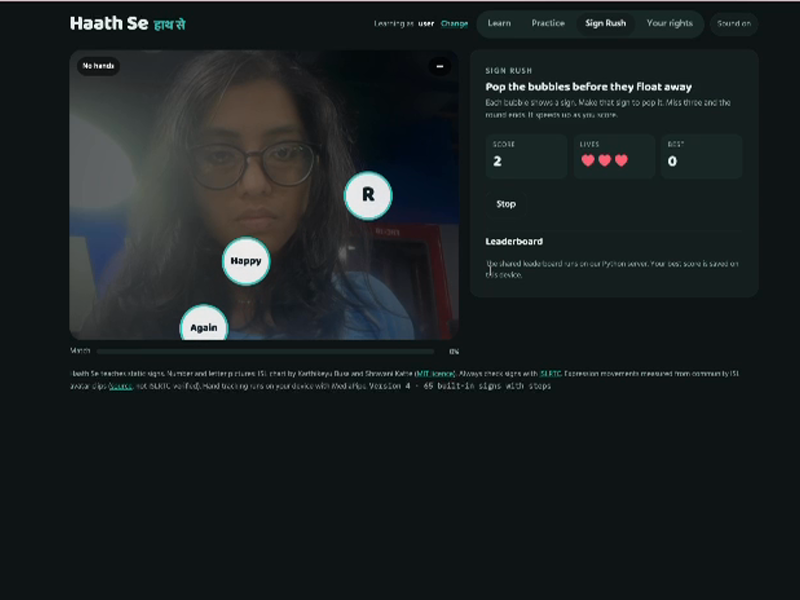
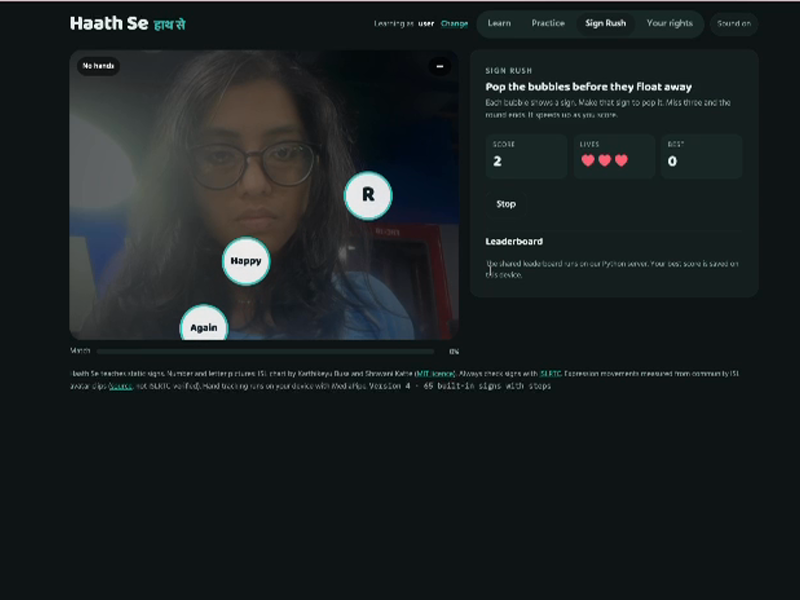
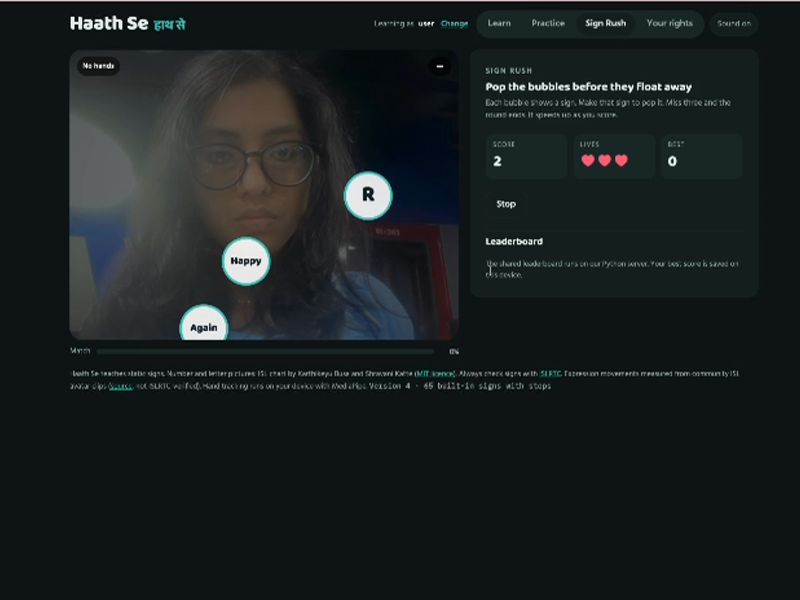
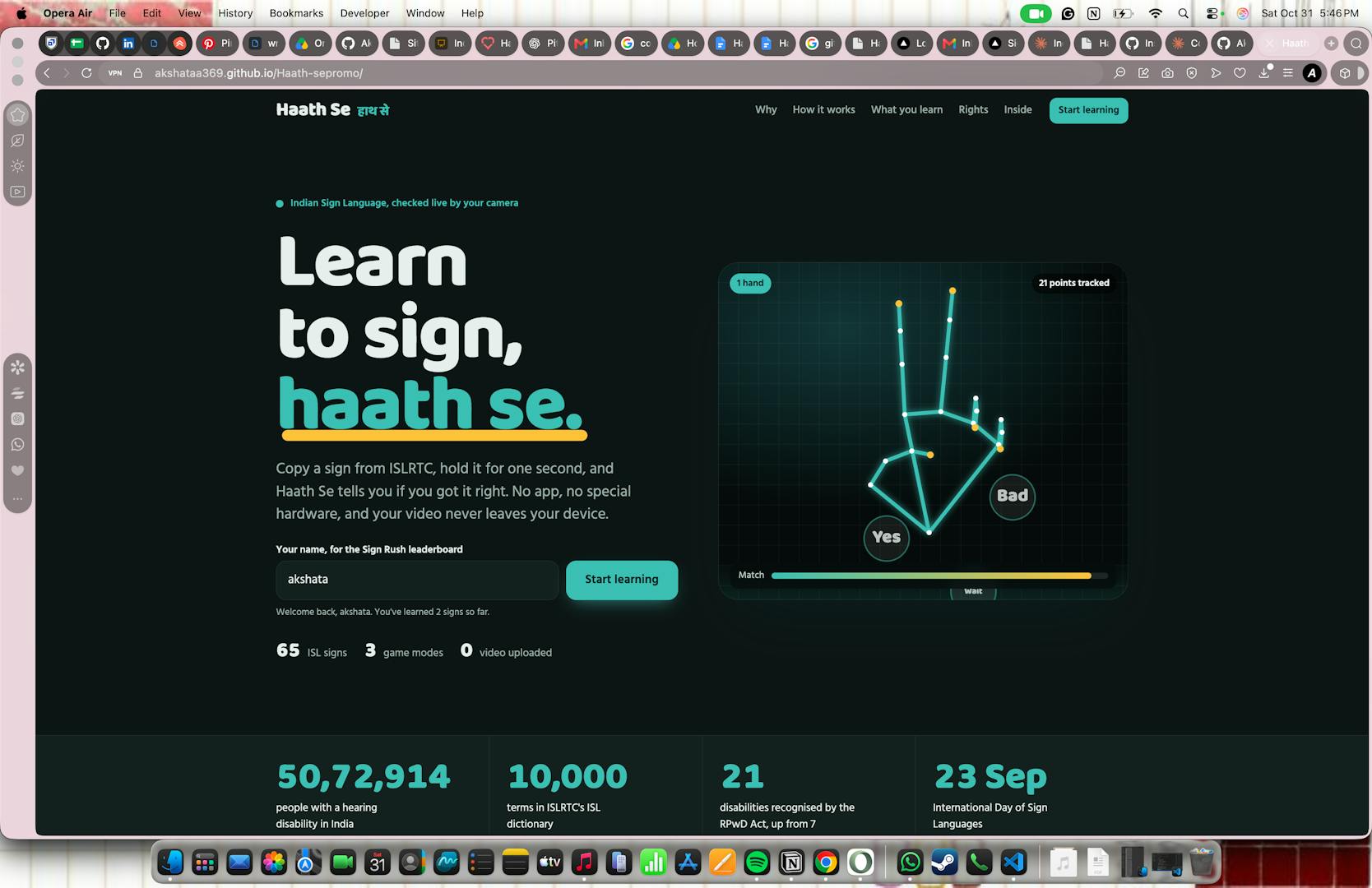
Introducing Haath Se, a webcam-powered game that teaches Indian Sign Language through real-time hand recognition, challenges, and arcade-style gameplay.
Learn a sign. Earn a star. Pop a bubble. And with every level, break down a barrier because inclusion shouldn't be a slogan we speak. It should be a language we learn.
"let your hands speak, and let the world learn to listen."
What tools did you use to create your project?
How much experience does your group have? Does the project use anything (art, music, starter kits) you didn't create?
We’re beginner coders, and this was our first time working with computer vision. We came in with a problem, not a tech stack: almost every project here is a game or a website, and we wanted to build for the 50 lakh Indians with a hearing disability.
Being upfront about what we didn’t create:
Code: we used Claude, an AI assistant, to write it. We chose the idea, designed the features, decided which signs and rights to include, tested everything on our own hands, found bugs and pushed for fixes. We made sure we can explain how every part works.
Hand tracking: Google’s MediaPipe Hand Landmarker, a pre-trained model.
Sign data: numbers and letters were built from an open ISL chart by Karthikeyu Busa and Shravani Katte (MIT licence).
Facts and law: RPwD Act 2016, NEP 2020, UN CRPD, Census 2011 and ISLRTC reports. Every fact in the app is sourced.
Everything else is ours:
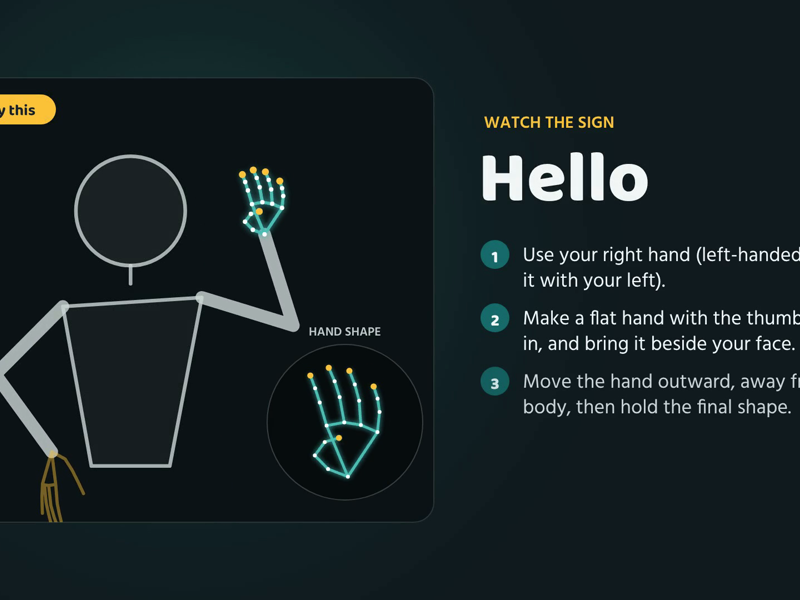
the concept, the “rights first” learning flow, turning raw images and clips into 3,537 hand-shape examples, the step-by-step instructions, the games, the pitch and the film.
What challenges did you encounter?
Most ISL letters use two hands, and the sources we found were photos and videos, not data a camera can check against. We ran every sign through MediaPipe 54 times (resized, tilted, mirrored) and measured hands frame by frame in 30 clips, then checked every skeleton by eye.


Made with 💖 by robots running our open-source software and GraphQL APIs.