CASCADEGUARD AI
Unmute
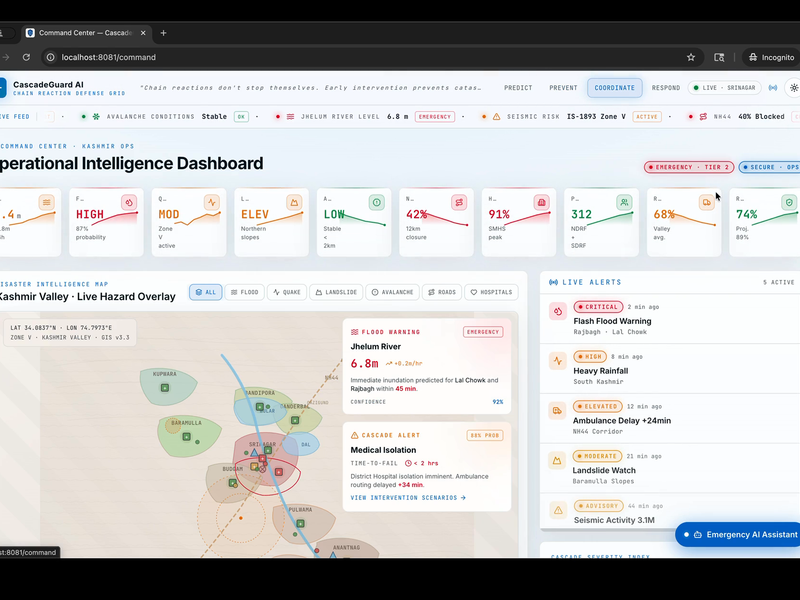
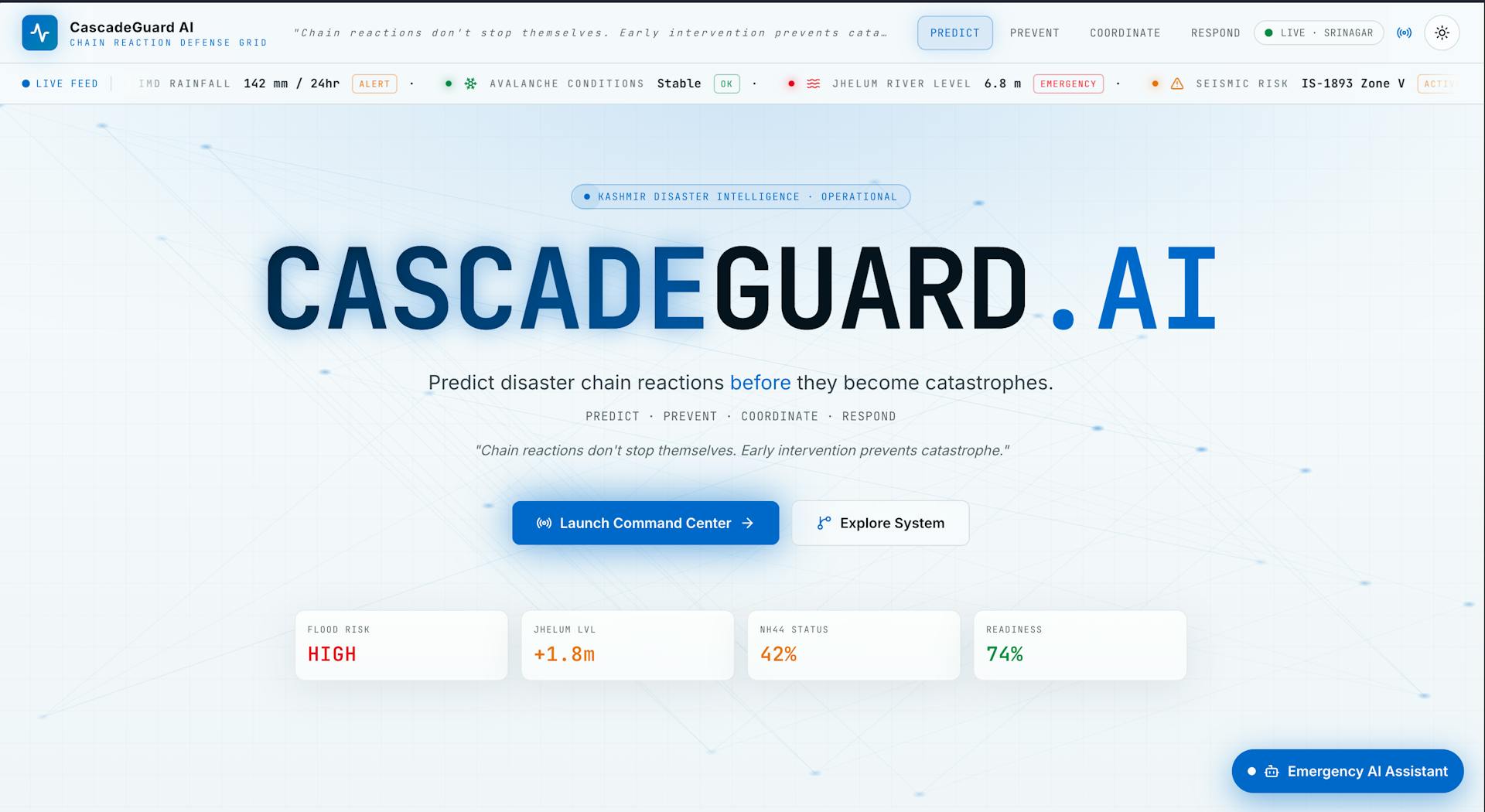

CascadeGuard AI is an AI-powered disaster intelligence and emergency response coordination platform designed to predict, prevent, and reduce cascading disaster failures. The system analyzes disaster chain reactions such as floods, earthquakes, landslides, and infrastructure disruptions, providing predictive risk intelligence, authority routing, hospital coordination, emergency resource tracking, and community reporting. Designed with a Kashmir-focused operational model, CascadeGuard AI aims to improve disaster resilience through proactive intervention and operational intelligence.
AI Usage Disclosure: Approximately 40–60% AI-assisted development. AI tools were used for brainstorming, UI refinement, presentation support, content generation, and accelerating frontend development workflows. System architecture decisions, feature planning, disaster coordination logic, operational design, customization, debugging, integration decisions, and overall project direction were developed and implemented by the team.
AI Usage Disclosure: Approximately 40–60% AI-assisted development. AI tools were used for brainstorming, UI refinement, presentation support, content generation, and accelerating frontend development workflows. System architecture decisions, feature planning, disaster coordination logic, operational design, customization, debugging, integration decisions, and overall project direction were developed and implemented by the team.
What tools did you use to create your project?
How much experience does your group have? Does the project use anything (art, music, starter kits) you didn't create?
We have intermediate experience with web development and frontend development. CascadeGuard AI was built using React, TypeScript, and Figma, and focuses on disaster intelligence, operational mapping, emergency coordination, and AI-assisted response systems.
To build the project, we used external resources like mapping references and public information about hospitals and locations in Kashmir to make the operational model feel realistic.
AI tools were also part of mainly for brainstorming ideas, improving UI/UX, refining features, debugging, generating presentation material, and speeding up development. We also took inspiration from emergency response systems and operational intelligence dashboards when designing the platform.
The core idea, disaster-chain logic, wireframe, feature planning, system design, customization, integration decisions, and overall implementation were done by our team.
To build the project, we used external resources like mapping references and public information about hospitals and locations in Kashmir to make the operational model feel realistic.
AI tools were also part of mainly for brainstorming ideas, improving UI/UX, refining features, debugging, generating presentation material, and speeding up development. We also took inspiration from emergency response systems and operational intelligence dashboards when designing the platform.
The core idea, disaster-chain logic, wireframe, feature planning, system design, customization, integration decisions, and overall implementation were done by our team.
What challenges did you encounter?
One of our biggest challenges was making CascadeGuard AI feel like a real disaster response platform instead of just a dashboard. We also had to bring together maps, emergency workflows, predictive systems, and frontend development into one smooth experience. Building realistic Kashmir-focused scenarios and keeping the UI simple while handling lots of information took a lot of testing, learning, and iteration.


Made with 💖 by robots running our open-source software and GraphQL APIs.